
Custom white oak cabinets in Austin, TX
Verde draws, fabricates and installs custom white oak kitchens, islands, built-ins and vanities for homeowners and design professionals across Austin and Central Texas. White oak rewards careful planning: the cut of the log, the layout of boards and veneers, and the finish decide whether a room reads calm and continuous or busy and patched. This is how we approach it.
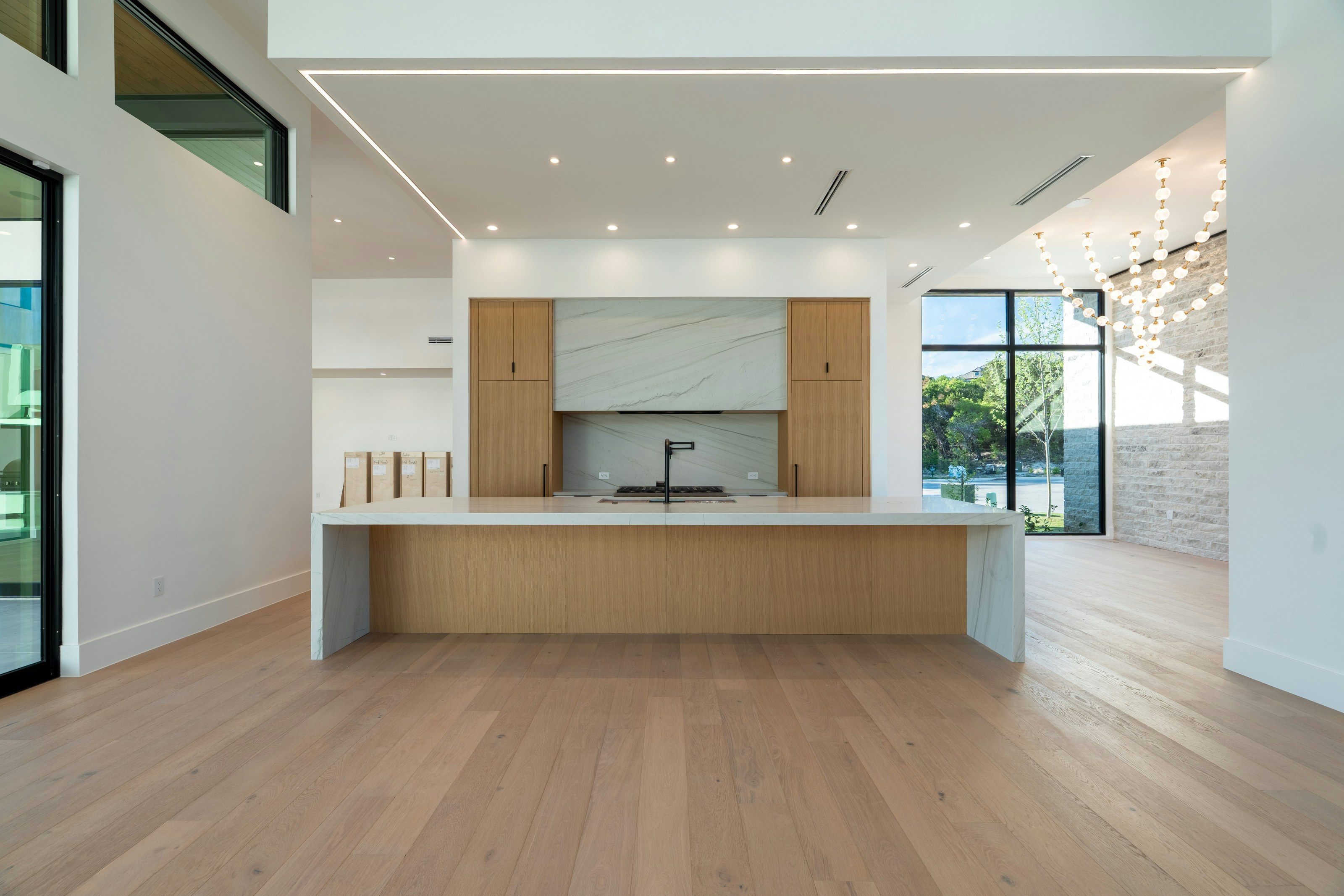
Rift-sawn vs plain-sawn white oak
Rift-sawn oak is cut so the growth rings meet the face at a steep angle. The result is a tight, straight, linear grain with very little of oak's ray fleck. It is the cut most people picture when they ask for a quiet, contemporary white oak room.
Plain-sawn (flat-sawn) oak shows the cathedral arches and wider figure of the tree. It suits warmer, more traditional or rustic rooms and uses more of the log. Quarter-sawn oak shows pronounced ray fleck and is a deliberate choice on its own.
Grain direction and matching
On slab fronts the grain usually runs vertically, and we plan sequences so it flows from one door to the next across a run — and from upper to lower where the layout allows. Horizontal grain is possible on drawer banks and long low runs, but it has to be decided on the drawings, not in the field.
Large flat panels and slab doors are typically made from veneered panel stock so the faces stay flat and sequence-matched. Frames, edges, solid mouldings and face frames are solid lumber. Knowing which parts are which is how we keep colour and grain consistent across materials.
What natural variation looks like
White oak is a natural material. Even selected rift stock varies in tone from board to board and log to log, and it ambers slightly with time and light. We show real samples from current stock so you approve what will actually be built, not a catalogue photo.
Where we use it
White oak works across construction methods. It is a natural fit for frameless slab fronts, slim Shaker doors in face-frame or inset work, and furniture-style pieces.
- Kitchens and islands, including panel-ready appliance fronts
- Built-ins, media walls, libraries and home offices
- Floating and furniture-style vanities
- Bars, coffee stations and pantry cabinetry
- Hood surrounds and wall paneling
Finishing white oak
Clear finishes range from ones that keep oak close to raw and pale to ones that warm it noticeably. Stain can mute or deepen the tone, but heavy stain hides the grain you chose oak for. We finish sample boards in the real species and sheen for approval.
On most custom work we fabricate and complete shop preparation, then install and fully field-fit the cabinetry — including joining, scribes, fillers, panels, moldings, and adjustments — before final preparation, the approved finish, cure, reassembly, final adjustment, touch-up, and cleanup. Material movement and joint design remain part of the finished work; no finish is presented as making wood joints permanently invisible. See the full finishing sequence. Prefinishing in the shop remains an option when the project calls for it.
Before requesting quotes, use the Journal's rift-sawn white oak specification checklist to document material locations, grain sequences, samples and installed scope.
Material and room details
Common questions
- Is rift-sawn white oak more expensive than plain-sawn?
- Usually, because rift cutting yields less usable material from each log. We price every project after reviewing the drawings, so the difference is quoted on your actual scope rather than as a general figure.
- Will my white oak cabinets match the samples exactly?
- They will match the approved species, cut, finish and sheen. Natural board-to-board variation remains, which is why we approve samples from current stock and plan grain sequences on the drawings.
- Can white oak be used in a bathroom?
- Yes. With a suitable finish, sealed edges and sensible detailing around the sink and floor, white oak performs well in vanities.
- Should I choose rift-sawn or plain-sawn white oak?
- Choose rift-sawn for straight, quiet, linear grain with little ray fleck; choose plain-sawn for the arched cathedral figure that reads warmer and more traditional. Seeing finished samples of both side by side is the clearest way to decide.
- Where is veneer used and where is solid white oak used?
- Slab doors, drawer fronts and large flat panels are typically veneered panel stock so they stay flat and sequence-matched. Door frames, edges, solid mouldings and face frames are solid lumber. Proposals should show which parts are which.
- What affects the cost of white oak cabinetry?
- The main factors are the cut (rift yields less usable material than plain-sawn), how much grain matching is specified, solid versus veneer construction, door style, hardware, finish system and installed scope. We quote each project after reviewing its drawings rather than publishing general figures.
- What should I compare in white oak cabinet proposals?
- Ask each proposal to identify the wood species and cut, where solid wood or veneer is used, grain direction and matching approach, and the approved finish and sheen. Compare the same scope: doors and drawer fronts, exposed ends, panels, trim, hardware, installation and finishing responsibilities. A photograph alone does not define those details.
- What should I send for a white oak cabinet review?
- Send available plans or elevations, room photos, reference images, project location and the cabinet areas included. Note whether you prefer straight, quiet grain or more visible natural figure. Drawings and finish samples should establish final material and appearance before fabrication.
Send the drawings. We'll review the scope.
Share what you have — plans, elevations, or reference images — and the studio will review the scope before confirming fit, pricing, or schedule.