
FAQ
Questions worth answering before you inquire.
Straight answers about fit, drawings, materials, and how scope and pricing get confirmed.
- What types of projects are a good fit?
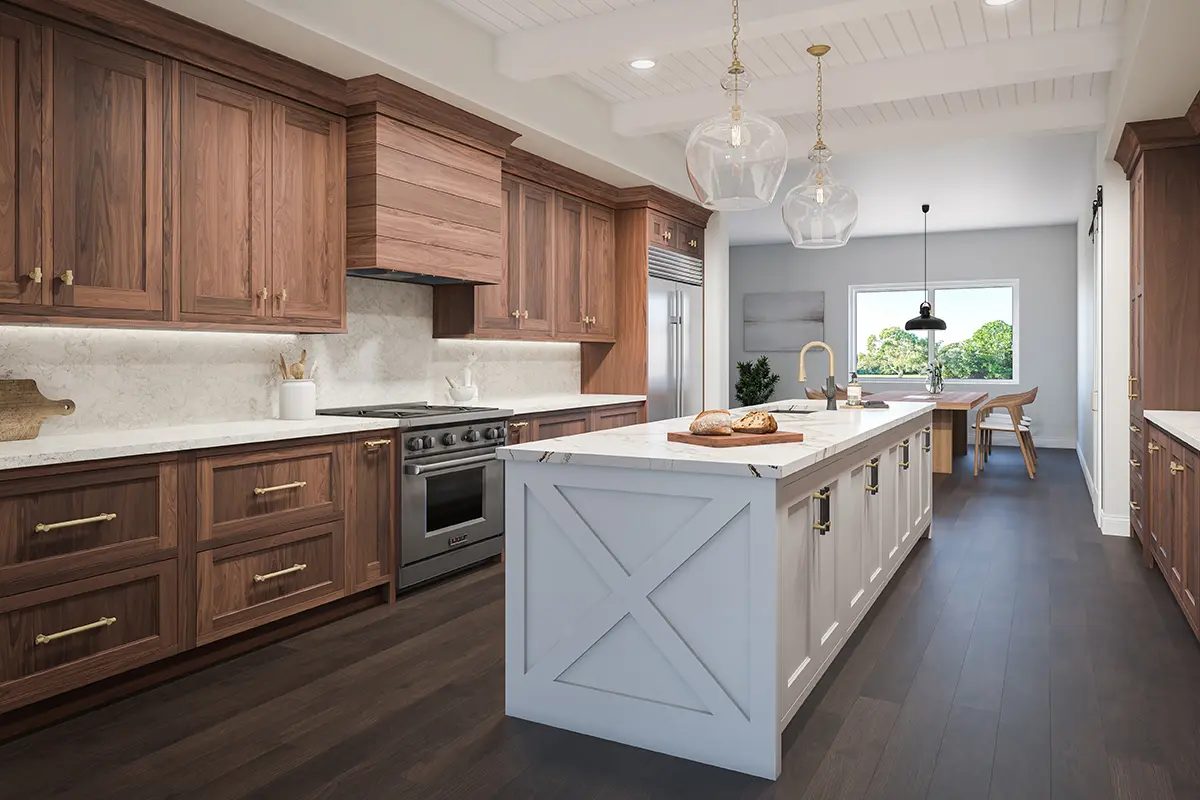
- Focused custom built-ins, media walls, offices, bars, vanities, mudrooms, and specialty pieces, plus select kitchens. See Capabilities.
- Do you work with interior designers and architects?
- Yes. Design studios, architecture practices, remodelers, and custom builders are our primary clients. We work alongside your team rather than replacing your role in the project.
- Can you work from architectural drawings?
- Yes. We work from designer or architectural drawings, review them for constructability, and raise questions before pricing or fabrication.
- Do you use Cabinet Vision?
- Yes. We use Cabinet Vision to document cabinetry for approval before fabrication. See Process.
- What is included in approval drawings?
- Depending on scope, they include plans, elevations, 3D views, dimensions, and clearances. They communicate cabinetry intent, not architectural or licensed trade work. See Process.
- When are drawings approved?
- Written approval is required before fabrication begins. See Process.
- Do you provide shop drawings?
- Yes. Detailed Cabinet Vision submittals are provided for review and written sign-off. See Process.
- What door styles do you offer?
- Slab, Shaker, slim Shaker, specialty profiles, glass, mesh, and other custom fronts may be considered depending on the project. See Door & Front Styles.
- Do you build face-frame and frameless cabinetry?
- Yes. Face-frame full overlay, flush inset, beaded inset, frameless, and project-specific hybrid construction may be considered. See Construction Methods.
- What drawer boxes do you offer?
- Plywood, hardwood, dovetail, and compatible metal drawer systems may be considered. Drawer boxes and runners are specified together; see Construction and Hardware.
- Which decorative panel brands can you specify?
- We specify professional brands including EGGER, ALVIC, and Shinnoki. These are application-specific and confirmed from samples. See Decorative Surfaces.
- Can you do lift-up, pocket, or sliding cabinet doors?
- Yes, where door size, weight, material, cabinet geometry, and clearances support the selected mechanism. See Hardware & Interior Function.
- Can cabinet doors or drawers open electrically?
- Electrically assisted opening — Blum SERVO-DRIVE is one example — can be specified when the design calls for touch-to-open on handleless fronts and the electrical requirement is coordinated in advance with the project's licensed trade. We do not install or commission powered systems unless a written scope says so.
- Where does your hardware come from?
- We specify professional hardware from manufacturers including Blum, Hettich, Salice, and Häfele. Selection is application-specific and based on current technical data. See Hardware.
- What interior organization options are available?
- Roll-outs, waste and recycling, pantry and corner fittings, drawer organization, appliance storage, and wardrobe accessories may be considered. Browse the Design Library and Hardware.
- How do you work with architects and designers day to day?
- Send what you have—plans, specs, and timing. We return RFI questions, buildability notes, and approval drawings once engaged. See Trade Professionals.
- Can specialty doors or panels be sourced?
- Yes. Specialty fronts, finished components, or decorative panels may be produced by qualified fabricators when that produces the correct result. The studio remains accountable for the approved cabinetry scope.
- Can you integrate cabinet lighting?
- Cabinetry can be planned for integrated lighting when fixture, channel, control, and electrical requirements are coordinated early. See Innovation & Integration.
- Can cabinetry coordinate with smart-home or AV systems?
- Yes. Cabinetry can coordinate with power, charging, cable management, AV equipment, ventilation, and service access. See Innovation & Integration.
- Who performs the electrical work?
- Licensed trades (electrical, plumbing, mechanical). We plan the cabinetry and access; final wiring and connections are performed by the appropriate professional. See Innovation & Integration.
- Do you offer design help?
- We develop the cabinetry design around your intent — proportions, construction logic, and detailing. We don't take over the interior design or architecture.
- Do you handle installation?
- Yes. We install our cabinetry and stay through the final fit and adjustments.
- What materials and cabinet styles do you offer?
- Paint-grade materials, hardwoods, natural and engineered veneers, and selected decorative panels may be considered. Explore the Design Library and Wood Species.
- Do you provide painting, countertops, or decorative hardware?
- Finishing and countertops are scope-specific and can be quoted or coordinated when written into the project scope. Stone fabrication is completed by qualified partners, not in house. See Cabinet Finishes and Countertops & Surfaces.
- What is your service area?
- The shop is based in Hutto and serves Austin and surrounding Central Texas communities. See Service Areas.
- What information is needed for an initial review?
- Plans, cabinetry details, material intent, appliance specs, site location, and timing. See Project Planning.
- How are timelines and pricing established?
- Confirmed per project after scope review. We do not publish universal lead times. See Process.
- Do you take on commissioned woodwork and furniture?
- Yes. We build one-of-a-kind tables, desks, mantels, and architectural elements. See Commissioned Work.
- What is not included in commissioned woodwork?
- The complete offered and excluded scope is maintained on Commissioned Work so it stays accurate in one place.
- What affects the budget for a cabinetry project?
- Scope, construction method, materials, and complexity. We identify which factors are driving your specific budget. See Process.
- Will the cabinetry look exactly like the sample?
- Samples are representative. Wood grain and color vary naturally and shift with age. We review these together before finishing. See Wood Species.
- How should finished cabinetry be cared for?
- Treat it as fine furniture. Wipe spills promptly with a soft, barely damp cloth and dry the surface; avoid abrasive cleaners, scouring pads, bleach, ammonia, and solvent-based products; keep standing water and steam away from edges, joints, and sink cabinets; and use pads under anything that scratches. Stable indoor humidity keeps solid wood movement to a minimum.
Still deciding
Ask the studio directly.
If your question isn't here, send it with your project details and we'll answer it plainly.