
How to Choose Cabinet Materials for Your Austin Home (and Why It Matters)
When the conversation turns to cabinets, style usually comes first — Shaker or slab, painted or stained, light or dark. Those choices matter. But the thing that decides how those cabinets look and function in ten years is the material underneath the finish. Material choice affects durability, moisture resistance, finish quality, structural strength, and long-term value. If you are investing in cabinetry in Austin, here is what is worth understanding before the decisions are made.
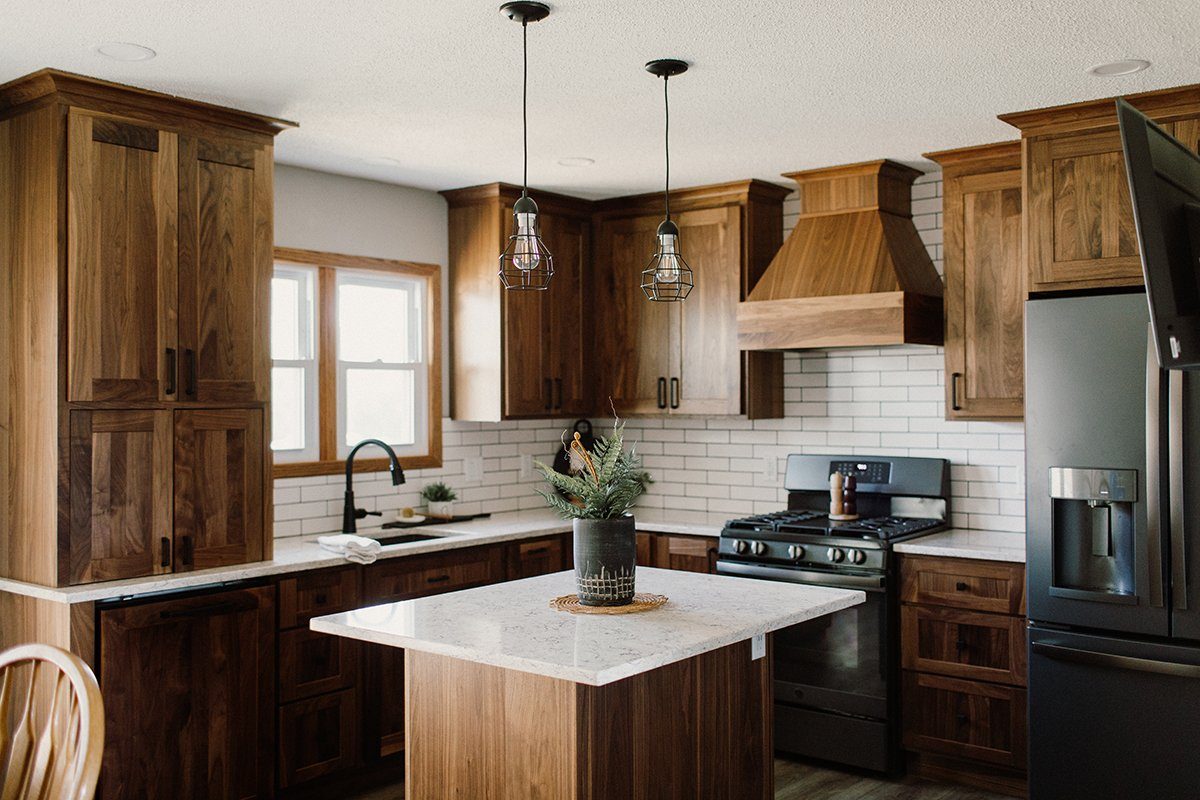
Walnut cabinetry with coordinated grain and panel details
The cabinet box: the part you don't see
The cabinet box is the structural core. If the box fails, nothing else about the cabinet matters. This is where the first real difference between cabinetry levels shows up.
¾" plywood construction
- Strong and dimensionally stable
- Holds fasteners securely over time
- Resists sagging on long spans
- Dimensionally stable through Central Texas humidity swings when properly sealed
- The standard for cabinetry meant to last
Quality plywood boxes, properly installed, hold up for decades. This is the construction we build to where the spec calls for it.
Particleboard, MDF and other engineered panels
- Performance depends on panel grade, density, core, and moisture resistance — not the category name
- Good engineered panels are flat, consistent, and the usual substrate for veneer, laminate, and decorative panels
- Low-grade panel near sinks or with exposed edges is vulnerable to moisture swelling
- Evaluated by grade, box construction, fastening and edge detail, and where the cabinet sits
Door and front materials
Doors are what you see and touch every day. The substrate changes both appearance and longevity.
Solid hardwood
- Natural grain that no print can fully reproduce
- Can be refinished rather than replaced
- Ages gracefully — it wears in, not out
- Strong and repairable
White oak, walnut, maple, and alder are common starting points. Each species has its own grain, color, and working character, and availability is confirmed per project from current stock — never assume a species is always on hand.
Paint-grade MDF and hardwood
- An extremely smooth finish surface
- Ideal for painted fronts — minimal grain telegraphing
- Stable, with little seasonal movement
- A cost-effective choice for painted Shaker and slab fronts
For painted cabinetry, an MDF center panel within a hardwood frame gives a cleaner painted face than solid wood, which moves with the seasons.
Veneer and decorative panels
Real-wood veneer over a stable substrate, and engineered decorative panels, offer a real-wood appearance with controlled grain and consistency. For selected frameless work, textured, matte, high-gloss, and wood-look panels from lines like EGGER, ALVIC, and Shinnoki open up finishes that solid wood can't match. These are materials we can review, specify, or source where appropriate — final selection always comes from current physical samples, matched edgebanding, and fabrication review, not from a screen image.
Drawer boxes and hardware: where quality shows
Drawers are opened and closed more than any other part of the cabinet. This is where true custom cabinetry separates from mass-produced.
Dovetail drawer boxes
- Interlocking joinery that is glued — mechanical interlock and adhesive work together
- Strong and long-lasting
- A visible mark of joinery craft
Undermount soft-close slides
- Hidden under the drawer — a cleaner interior
- Smooth, full-extension travel
- Load rating depends on the exact runner model and length, confirmed per project
Concealed soft-close hinges
- Adjustable for precision alignment after install
- Quiet closing
- A clean, uninterrupted front
These are not cosmetic upgrades. They change how the cabinetry works every day and how long it keeps working. We never publish a load rating — ratings come from the exact selected manufacturer and product, confirmed per project.
Finishes: protection and appearance
The finish determines how cabinets look and how they hold up. Preparation matters more than the paint brand alone — surface prep and curing drive long-term performance.
Spray finishes (painted cabinets)
- A smooth, even film — applied on site after field fitting, or shop-prefinished where a project calls for it
- Proper primer systems and sanding between coats
- Durability, sheen, and cleanability depend on the exact product and cure — see the finish guide
Natural oil finishes
- Enhances rather than covers the wood grain
- Penetrates the wood fiber instead of sitting on top
- VOC content and care routine vary by product — confirmed from its current data sheet
- Highlights species like white oak beautifully
Why material choice matters in Central Texas
Austin-area homes see high summer humidity, strong sun, and seasonal expansion and contraction. Stable materials — quality plywood, properly finished hardwood, controlled veneer — reduce movement and the problems that come with it. Less stable materials are more likely to swell near sinks, delaminate, show premature wear, and need early replacement.
How to compare quotes on material
When you compare cabinetry quotes, ask direct questions about construction. Two kitchens can look similar in a photograph and be built nothing alike.
- Is the cabinet box ¾" plywood?
- Are the drawer boxes dovetail, and what material?
- Are the slides undermount soft-close?
- What finish system is being used, and how many coats?
- What hardware brand and level is included?
Send the drawings. We'll review the scope.
The first step is a conversation about the drawings and the conditions. Everything else follows from that.